URUGUAY
Like Many other countries, Uruguay is not free form threats to its surf breaks, including poor waste disposal, fishing nets in wave zones, oil or fuel spills at sea, port infrastructure or other engineering works, and dredging works at the mouths of stream and rivers that alter the natural characteristics of the beaches and seabed.
Although the protection of breakers is not expressly considered in its legislation, general environmental regulations can be applied in a supplementary manner, such as the declaration of natural protected areas (those containing waves), or marine spatial planning (that considers surf breaks). However, neither the former nor the latter have expressly considerede waves.
There is currently a proposal to create a Uruguayan Surf Reserves Program, which seeks to register the most iconic waves in order to declare them protected areas through marine-coastal management instruments: in this case, concerned communities have a dominant role in its implementation. In 2021, the Ministry of Environment expressly and formally declared its support for the Program.

URUGUAY
1/
GENERAL RULES
Uruguayan legislation provides no explicit protection for surf breaks, so general environmental regulations are used as supplementary measures to protect waves from threats and impacts.
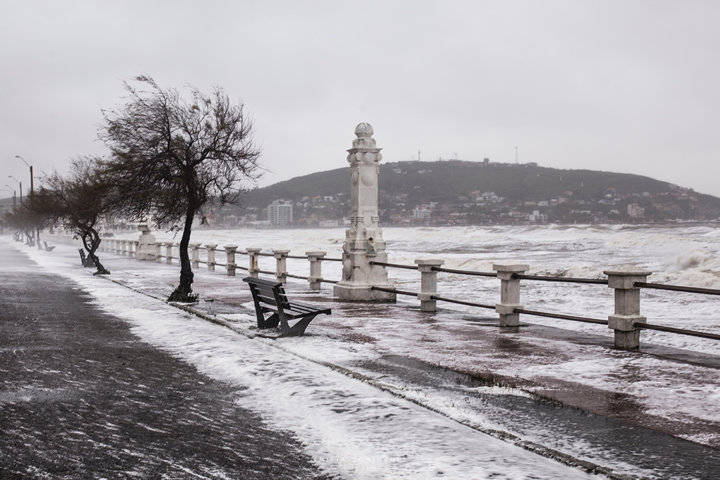
In Piriápolis, the construction of breakwaters to reduce the retreat of the coastline modified the dynamism of the waves. As a result, the beach has been submerged during floods and, although it still has good waves, it is difficult to safely practice maritime sports there. Photo: Emilia Dominguez.
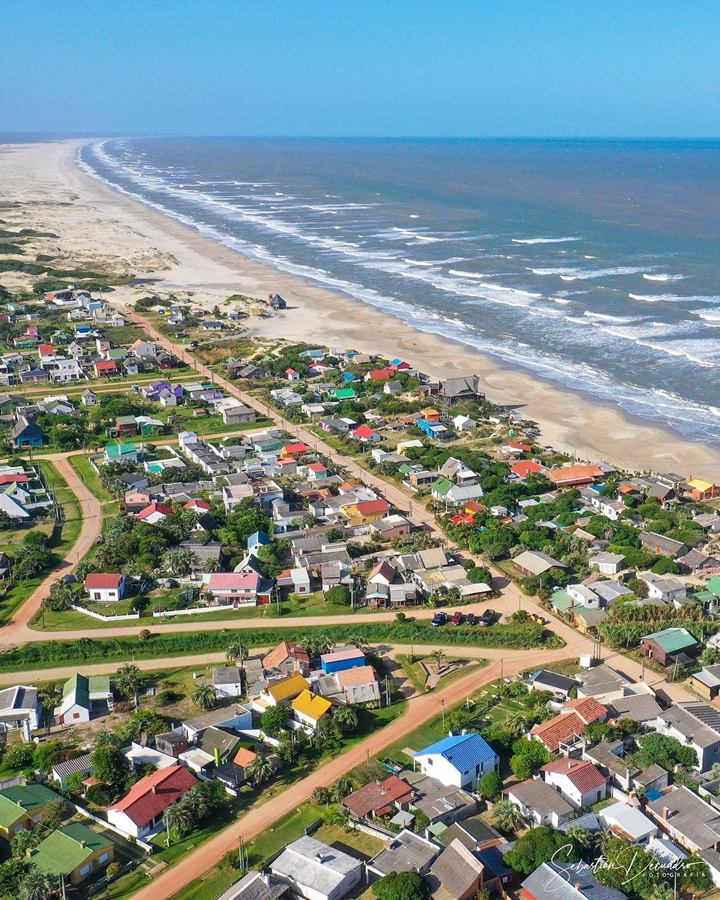
In Aguas Dulces, Rocha, the summer houses built without regard for territorial planning and very close to the beach altered the distribution of wave energy. This resulted in intense erosion of the sea edge and is causing damage to buildings. The debris ends up on the beach, which harms human safety for recreational use. Photo: Sebastián Decuadro.
2/
URUGUAYAN SURF RESERVE PROGRAM (PURS)
Inspired by the Brazilian Surfing Reserves Program and the World Surfing Reserves Program, the Uruguayan Surfing Reserves Program (PURS) was created. It intends to create surfing reserves and provide them with protection through marine-coastal management instruments.
The objective of PURS is to achieve three levels of recognition:
Municipal surfing reserves. They would be recognized by the municipalities (first level of government) through a resolution of interest (maximum legal tool of local governments). The reserves would be discussed by the Environmental Commission of each municipality, since they are composed of representatives of the local surfing community, local authorities and others. The Municipality of Piriápolis and the Municipality of Solís Grande have already declared the PURS of interest, and have recognized the first surf breaks: Playa Verde, Playa Grande, Punta Fría, San Francisco, Punta Colorada, Punta Negra, among others.
Departmental surfing reserves. They would be recognized by the departments (second level of government) through two mechanisms: they can be decreed by a resolution of the General Directorate of Tourism, or they can be recognized by the General Directorate of Environment through its System of Protected Areas in one of its management categories (different in each department). In 2022, two reserves were in progress: the Department of Maldonado, through the General Directorate of Tourism, and the Department of Canelones, through the Departmental System of Environmental Protection Areas.
National surfing reserves. They would be recognized by the Executive Branch through a resolution of the Ministry of the Environment. The Ministry should create a National Committee of Surfing Reserves made up of the organizations that originated the national reserve proposal, technicians from the National System of Protected Areas and representatives of municipal and departmental governments. Among its responsibilities the Committee would establish technical guidelines or orientations for the elaboration of local management plans; carry out human resource training and institutional strengthening; disseminate information related to the PURS; formulate criteria or methods to recognize surfing reserves, and provide administrative support in the management of the reserves.
In 2020, this proposal was presented to the governmental and parliamentary level, and in 2021 the Ministry of the Environment prepared a letter of support for the PURS, where it indicated expressly that it considers its study and discussion to be of interest, as a possible socio-environmental management tool, of which it values the potential impact that it can cause at the environmental level.
The national strategy of the PURS is as follows:
Implement a national program for the mapping of habitats of potential sites to be declared national surfing reserves, with a description of their ecosystems and the application of priority restoration measures.
Adopt legislation allowing the most iconic waves of the Uruguayan coast to be included in a national registry, which ensures that the natural course of the waves does not suffer anthropogenic disturbances, either by infrastructure or by pollution.
Create and promote systems for automatic detection, monitoring and collection of pollutant concentrations in breaker zones.
Integrate the cities that have surfing spots to a national tourism strategy or plan, to support their promotion, as well as development and employment projects.
The Program also proposes collaboration between public and private organisms for its implementation, where the broader management structures and the local reality with reserves converge. It is a principle of the Program that the creation of national surfing reserves is a voluntary process that starts with the interested communities: they have a predominant role in their execution and manage the sustainability of their coastal space, thus promoting the decentralization of institutional governance.
3/
SURF BREAKS AND PROTECTED AREAS
In Uruguay, establishing protected areas has been key to nature conservation. Law 17234 of 2000 created the National System of Protected Areas (SNAP), which currently includes 17 areas, of which six have aquatic coastal portions, covering 1,010.68 sq km (0.7% of the territory). Several surf breaks are indirectly protected within these areas; however, waves are not a specific conservation element in any of them.
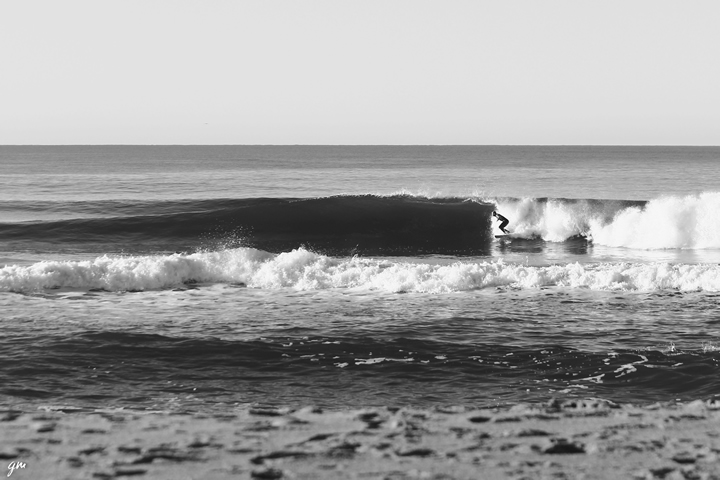
The Garzón wave in Laguna Garzón is a consistent surf break that breaks in both directions over a sandy bottom, making it ideal for winter surfing. In 2021, the SNAP invoked the Uruguayan Program of Surfing Reserves among the contributions submitted to prepare the Management Plan of the Laguna Garzón Protected Area and include the surf breaks among the objects of conservation. The dynamics of the surfing zone was also thought as a key ecological attribute of the marine zone. Photo: Germán Meirana.
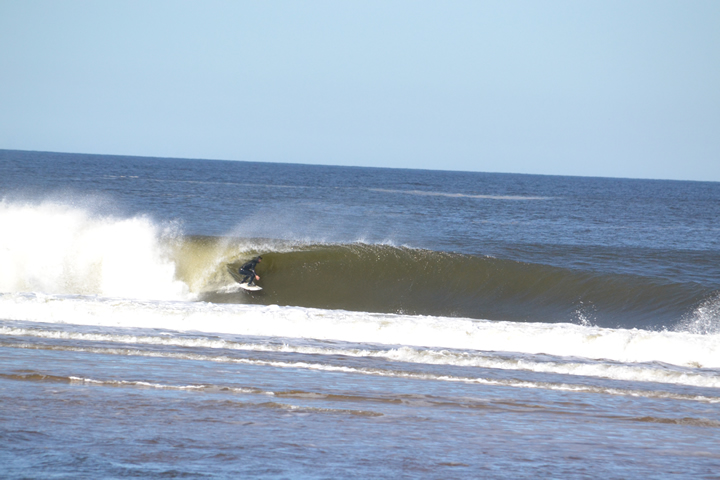
In Laguna de Rocha there are quite consistent waves, left and right, ideal for surfing in winter. It works best with southern swells and winds. The sandy bottom means that the best surfing conditions at the mouth are generated at low tide, offering several high-quality tube-shaped peaks. Photo: Guillermo Rodríguez.
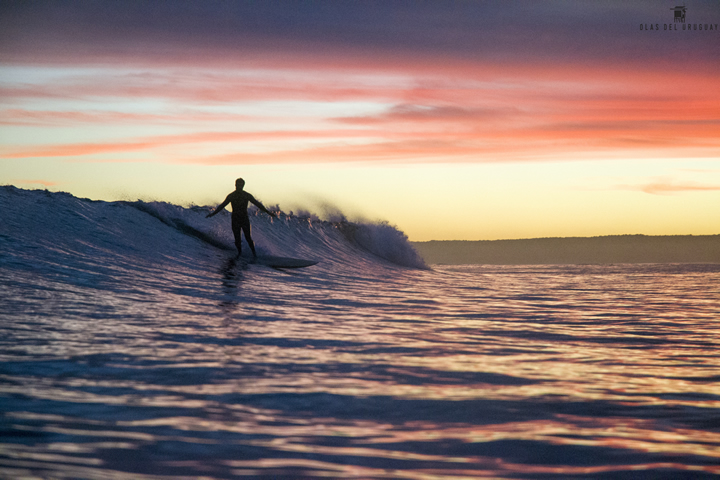
Cabo Polonio National Park has three areas of importance: Playa del Sur (Mansa), with several lefts and right-hand waves when influenced by the south swell and winds; Playa Brava also has left and right-hand waves when eastern swells arrive; and Playa La Calavera (Punta de Rocas), has a fairly consistent right-hand wave, influenced by the southeast swell, and a rocky bottom that makes it the most dangerous wave in the country. Photo: Martín Corsino.
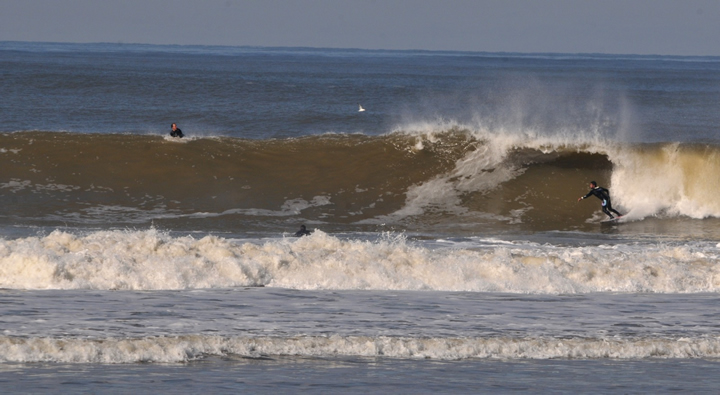
Santa Teresa National Park features excellent sandy beaches with good conditions for waves up to 2.5 meters. Notable surf breaks include La Moza, a Uruguayan surfing icon with one of the country’s best right-hand waves reaching 500 meters in length. El Barco and Los Pesqueros offer extensive left-hand waves with good barrel sections when southern swells arrive. Las Achiras provides both left and right surf breaks over two meters when influenced by eastern swells. Photo: Guillermo Rodríguez.
Less than half of the 17 protected areas of the SNAP have management plans, which is still a challenge for Uruguayan institutions.
4/
SURF BREAKS IN MARINE-COASTAL ZONE MANAGEMENT PLANS
The Law on Territorial Planning and Sustainable Development (Law 18308 of 2008) establishes the general regulatory framework for land use planning and sustainable development in the country. Article 47 defines that land use planning instruments must have a strategic environmental assessment approved by the Ministry of the Environment with a focus on conservation. This aspect is regulated by Decree 221 of 2009, which in Article 5 establishes the need to define the objectives of environmental protection in such valuation. Thus, when faced with projects that will affect the surf breaks, civil society can invoke these norms and request the Ministry of the Environment that, among the conservation objectives of the strategic environmental assessment, the surf breaks may be considered.
Also, in 2019 the National Guideline for Territorial Planning and Sustainable Development of the Coastal Space of the Atlantic Ocean and the Río de la Plata (Law 19772) was enacted, which aims to promote the quality of life of the population, as well as the environmentally sustainable and democratic use of natural resources, through social and economic development, in line with the protection of the coastal space. The Guideline, in Article 7, states that land use planning instruments that refer to the coastal space should take into account guidelines that would include the surf breaks. Although waves are not expressly mentioned, refers to free and public access to the shore, respect for the natural dynamic processes of the coastal space, protection of coastal ecosystems and integrated management of the coastal space.
In addition, Article 8 of the Guideline establishes that new urban developments and large infrastructure projects must identify interventions that have caused or may cause a potential negative impact on the coastal space. These projects have to establish actions to prevent and mitigate current and potential risks, as well as define measures to avoid or minimize the risk of pollution.
5/
PUBLIC ACCESS
There are regulations that guarantee free access to the beaches, and consequently, to the waves. For example, the Law on Territorial Planning and Sustainable Development (Law 18308 of 2008) provides that the first 150 meters of the shore, measured towards the interior of the territory, are spaces of free transit, and rejects any undertaking in the coastal defense strip that may cause negative impacts.
On the other hand, the National Guideline for Territorial Planning and Sustainable Development of the Coastal Space of the Atlantic Ocean and the Río de la Plata of 2019 clearly states the public nature of the beaches, and determines that their access and use (and, therefore, that of the surf breaks) is free for all people.
However, in Uruguay there are several private condominiums, in resorts such as Maldonado and Rocha, which extend for several kilometers along the coast, making access to beaches difficult, even when it is forbidden to privatize the beach.
6/
MARINE-COASTAL POLLUTION
Article 47 of the Uruguayan Constitution declares that environmental protection is of general interest and that people must refrain from any act that causes depredation, destruction or serious pollution.
There are also other binding environmental regulations, which directly or indirectly can be used to prevent or act against water quality impairment in surf break areas.